
What Affects uPVC Window Costs? A Homeowner’s Guide
If you are considering replacing the windows in your home, one of the first questions you are likely to ask is: how much do uPVC windows cost?
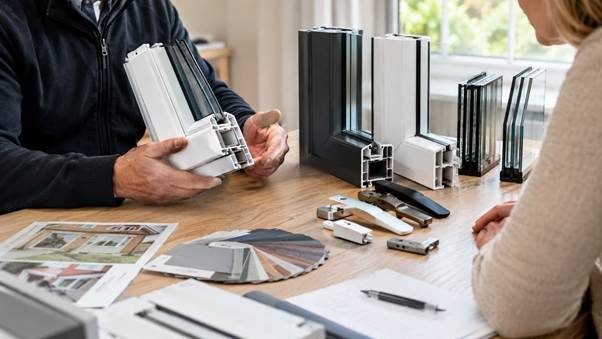
The difficulty is that there is no single price that applies to every property. The final cost of a uPVC window installation depends on a combination of factors, including the number and size of windows, the style of opening, the frame system, the type of glass, colour, hardware, ventilation, security requirements and how straightforward the installation is.
This means that two homes with a similar number of windows can receive very different quotations.
Rather than looking for a simple price-per-window figure, homeowners should understand what is included in a quotation and compare suppliers on a like-for-like basis.
Here are the main factors that can affect the cost of uPVC windows.
1. The number of windows
The total number of windows is one of the most obvious factors affecting the overall cost.
Replacing a single window is a very different project from replacing the windows throughout an entire house. A larger order may involve more materials, manufacturing and installation time, but the overall quotation will depend on the specification of every individual window.
It is therefore important to establish exactly which windows are included in the quotation.
For example, one quotation may include ten replacement windows, while another may appear cheaper because it covers only eight. Check the window schedule carefully before comparing the totals.
2. Window size
The dimensions of each window can also affect the cost.
Larger windows generally require more frame material and glass. They may also require different hardware or design considerations depending on their size and opening configuration.
Unusually shaped windows can require additional manufacturing work compared with standard rectangular designs.
For this reason, a quotation based simply on the number of windows can be misleading. Ten small windows are not necessarily equivalent to ten large windows.
A proper survey should establish the dimensions and requirements of each opening.
3. Opening configuration
The way a window opens can make a difference to its specification and cost.
Common configurations include fixed windows, side-hung casements, top-hung windows, tilt-and-turn windows and combinations of fixed and opening sections.
A fixed pane may have a different specification from an opening sash because opening windows require additional hardware and components.
If you are comparing quotations, check that the opening configuration is the same. A quotation for a simple fixed window should not be compared directly with one that includes multiple opening sections.
4. Frame system
Not all uPVC windows are identical.
Different manufacturers and systems can have different frame designs, profiles, chambers, reinforcement arrangements, finishes and performance characteristics.
The frame system can therefore influence both the appearance and specification of your replacement windows.
It is worth asking your installer which system is being quoted and what performance characteristics it offers rather than simply asking whether the windows are “uPVC”.
This is particularly important when comparing quotations from different companies.
5. Glass specification
Glass is another major part of a window’s specification.
Modern replacement windows can be supplied with different glazing options depending on the property’s requirements. Double glazing is common, while other specifications may be considered where particular performance requirements apply.
The glass specification can affect thermal performance, solar control, privacy, noise reduction and safety.
Safety glass may also be appropriate or required in certain situations, depending on the location and design of the window.
When comparing quotations, ask for the glazing specification rather than assuming that “double glazing” means exactly the same thing from every supplier.
6. Colour and finish
White uPVC remains a popular choice, but homeowners can also choose from a range of colours and finishes.
Coloured or wood-effect finishes can change the specification of the window and may affect the overall quotation.
The internal and external finishes should be checked carefully. Some homeowners may want the same colour on both sides, while others may want different finishes internally and externally.
Make sure the quotation clearly states the chosen colour and finish so you are comparing the same product.
7. Handles and hardware
Handles are easy to overlook when comparing quotations, but they form part of the finished window.
Different handle styles, colours and finishes may be available. Hardware also needs to be suitable for the selected window configuration.
If one quotation includes a particular handle finish while another includes a basic alternative, the two quotations are not necessarily like-for-like.
Ask the installer to specify the hardware included in the quotation.
8. Trickle vents and ventilation
Ventilation requirements can also affect the specification of replacement windows.
Some properties require or benefit from background ventilation, and the appropriate solution can depend on the existing building, the replacement windows and the ventilation strategy for the property.
Trickle vents are one example of a ventilation feature that may form part of a window specification.
Do not assume that ventilation components are automatically included in every quotation. Check what is being proposed and whether any existing ventilation arrangements need to be retained, upgraded or replaced.
9. Security specification
Security is another important consideration.
Modern windows can incorporate security features such as suitable locking systems and hardware designed to help resist unauthorised entry.
The precise security specification will depend on the window system and hardware selected.
When comparing quotations, ask what security specification is included rather than judging security simply by the appearance of the window.
A lower quotation may not represent the same specification if different hardware or locking arrangements have been included.
10. Access to the property
The ease of accessing the windows can affect installation requirements.
Ground-floor windows may be relatively straightforward to reach, while windows on upper floors can require additional equipment or working arrangements.
Restricted access, conservatories, extensions, awkward side passages and other property features can also make installation more complicated.
This is one reason why an installer should normally assess the property before providing a firm quotation.
11. Installation requirements
The window itself is only part of the project.
Installation involves removing the existing windows, preparing the openings, fitting the replacement frames and glazing, sealing the installation and completing the internal and external finishes as required.
The amount of work can vary considerably between properties.
You should therefore check whether the quotation includes removal and disposal of the existing windows, installation, finishing work and any other associated labour.
A quotation that excludes important installation work may initially look cheaper but could cost more once additional work is added.
12. Survey complexity
A professional survey can identify factors that are not obvious from photographs or measurements taken by a homeowner.
The surveyor may need to assess the condition and dimensions of the existing openings, access, surrounding brickwork, window configuration, ventilation requirements and any unusual features.
Older properties can sometimes present additional challenges because existing openings may not be perfectly standard.
Bay windows, large openings, unusual shapes, extensions and previous alterations can also make the survey and installation more involved.
This is why a proper survey is an important part of obtaining an accurate quotation.
Why You Should Compare Like-for-Like Quotations
When homeowners receive several window quotations, it can be tempting to choose the lowest figure immediately.
However, the cheapest quotation is not necessarily the best value.
Before comparing totals, create a checklist of what each company is actually offering.
Check:
- The number of windows
- Individual window sizes
- Opening configurations
- The uPVC frame system
- Glass specification
- Colour and finish
- Handles and hardware
- Ventilation requirements
- Security specification
- Removal of existing windows
- Installation
- Waste disposal
- Internal and external finishing
- Any additional work identified during the survey
For example, if one quotation includes a particular glazing specification, coloured frames, upgraded hardware and full installation, while another uses different specifications and excludes certain work, comparing only the headline price will not give you a fair comparison.
A useful quotation should make it reasonably clear what you are paying for.
Getting a More Accurate Idea of uPVC Window Costs
There is no reliable universal price for replacing uPVC windows because every property and specification is different.
The best way to understand the likely cost for your home is to have the windows properly surveyed and receive a detailed quotation based on the actual requirements.
If you are researching the subject before requesting quotations, our guide to uPVC window costs provides further information for homeowners considering replacement windows in Manchester.
The most important point is to look beyond the headline figure.
A window is a long-term part of your home, so the frame system, glazing, hardware, security, installation quality and overall specification all deserve consideration.
Final Thoughts
The cost of uPVC windows depends on much more than simply the number of windows you need.
Size, opening configuration, frame system, glass, colour, handles, ventilation and security can all influence the specification. The property itself can also affect installation through access, existing openings and the complexity of the survey.
When requesting quotations, give each installer the same requirements wherever possible. Then compare the specifications carefully.
Like-for-like comparison is the key.
Instead of asking only, “Which company is cheapest?”, ask, “What exactly is included in this quotation?”
That approach can make it much easier to understand the true value of each quotation and choose replacement windows that are appropriate for your home.
This is structured as an evergreen homeowner guide and deliberately avoids quoting invented “average” prices.