
uPVC Windows vs Aluminium Windows: Manchester Guide
uPVC Windows vs Aluminium Windows: Manchester Guide
Choosing between uPVC and aluminium windows is not simply a question of which material is “best”. Both can work well in Manchester homes and commercial properties, but they offer different visual styles, frame proportions, colours, maintenance requirements and practical characteristics.
The right choice usually depends on the property, the size and shape of the openings, the desired appearance, the glazing specification, budget and how the windows will be used.
For homeowners comparing options, it is also important to compare complete specifications rather than judging materials by headline prices alone. Trafford Windows Manchester Ltd, for example, supplies both uPVC and slimline aluminium systems, allowing the window specification to be considered around the individual project rather than forcing every property into one material. (Trafford Windows Manchester Ltd)
Appearance
The most noticeable difference between uPVC and aluminium windows is often their appearance.
uPVC windows have developed considerably and are available in several styles. Standard casement windows provide a familiar appearance for many British homes, while flush casements can give a flatter, more timber-inspired appearance. This makes modern uPVC suitable for both replacement projects and properties where a more traditional character is wanted. (Trafford Windows Manchester Ltd)
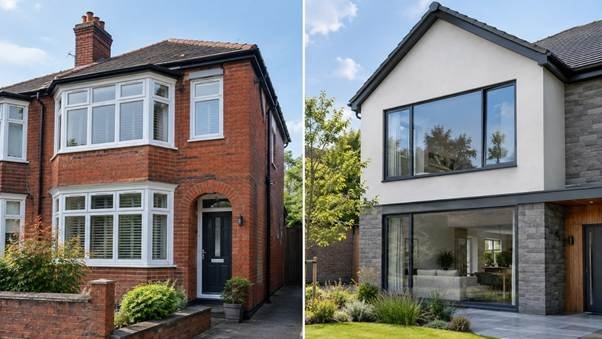
Aluminium windows tend to have a more architectural appearance. Modern aluminium systems can use slimmer frames, creating larger areas of visible glass. This can make a room feel brighter and can produce a cleaner appearance, particularly on contemporary properties.
Neither appearance is automatically better. A homeowner replacing windows on a traditional Manchester terrace may prefer the proportions of a uPVC flush casement, while someone designing a contemporary rear extension may prefer the narrow sightlines of aluminium.
Frame sightlines
Sightlines are an important consideration when comparing the two materials.
The sightline refers broadly to the amount of frame visible around the glass. Aluminium systems can achieve particularly slim profiles, which is one reason they are popular for modern extensions, large glazed areas and architectural projects.
Slim aluminium can provide larger areas of glass without making the surrounding frame visually dominant. Trafford Windows describes its aluminium systems as being suited to projects requiring narrow sightlines and larger glass areas. (Trafford Windows Manchester Ltd)
uPVC generally has a more substantial frame profile, although the exact appearance varies between systems. Flush casement uPVC can provide a cleaner external appearance than traditional projecting casements.
It is therefore worth looking at the actual profile being quoted rather than assuming that every uPVC or aluminium window will look the same.
Colours
Colour choice is another area where modern windows offer considerable flexibility.
uPVC windows are available in traditional white as well as a range of wood-effect and contemporary finishes. Depending on the system, homeowners may also choose coloured foils, including options such as Anthracite Grey, Black, Chartwell Green and Agate Grey. Some designs can have a coloured exterior with a white interior. (Trafford Windows Manchester Ltd)
Aluminium is also available in a wide range of powder-coated colours and finishes. This makes it particularly useful for contemporary designs where the window colour needs to coordinate with doors, cladding, brickwork or other architectural details.
For a Manchester property, colour should be considered alongside the existing elevation rather than selected in isolation. A dark frame may complement a modern extension, whereas a softer or wood-effect finish may work better with an older property.
Maintenance
Both materials are generally chosen partly because they require less routine maintenance than traditional timber.
uPVC does not normally require regular painting, and routine cleaning of the frames and glass is usually sufficient. This can make it attractive for homeowners looking for a practical replacement window.
Aluminium is also a low-maintenance material. Modern powder-coated finishes are designed to provide a durable surface without the regular painting associated with traditional timber.
Maintenance requirements can nevertheless vary according to the exact system, hardware, glazing and installation. Good-quality hardware and properly installed drainage and seals remain important regardless of the frame material.
Typical applications
uPVC remains a versatile option for many residential applications. It can be used for replacement casement windows, flush casements, tilt-and-turn windows and other configurations.
For straightforward replacement work, uPVC can provide a balance between appearance, performance, flexibility and cost. Trafford Windows supplies systems including Rehau Total 70 and Aluplast Ideal 70 for residential projects. (Trafford Windows Manchester Ltd)
Aluminium is often considered when slim sightlines, larger glazed areas or a more contemporary architectural appearance are priorities. It can be particularly suitable for large windows, modern doors, extensions, commercial frontages and projects involving extensive glazing.
This does not mean aluminium is only for new buildings, or that uPVC is only for older homes. Both can be used in a variety of situations.
Extensions
Extensions are one area where the differences between the materials can become particularly noticeable.
A modern rear extension often aims to maximise daylight and create a visual connection between the kitchen, dining area and garden. Slimline aluminium can be attractive in these situations because its narrow sightlines can increase the proportion of visible glass.
Aluminium can also be combined with bifold or sliding doors when a project requires large openings. Trafford Windows supplies slimline aluminium windows alongside bifold and sliding-door systems for larger glazed openings. (Trafford Windows Manchester Ltd)
However, uPVC can also be an effective choice for extensions. It may suit an extension designed to blend more closely with the existing house, particularly where conventional casement windows are already used.
The architectural style of the extension should therefore guide the decision.
Traditional homes
For traditional homes, the appearance of the frame can be as important as the material itself.
A standard modern-looking window may appear out of place on a period-inspired property. In these circumstances, a flush casement uPVC window can offer a useful compromise. It can reproduce some of the flatter appearance associated with traditional timber windows while retaining the low-maintenance characteristics of modern uPVC. (Trafford Windows Manchester Ltd)
Colour and hardware also matter. A suitable frame finish, glazing arrangement and handle can make a significant difference to the finished appearance.
Aluminium should not automatically be ruled out for older buildings either, particularly where a slim contemporary intervention is deliberately being created. The suitability will depend on the property’s character and any relevant planning or conservation requirements.
Modern homes
Modern homes often provide more freedom to use contemporary window proportions.
Aluminium can be particularly effective where the design prioritises clean lines, narrow frames and extensive glazing. It can complement contemporary brickwork, render, cladding and large-format doors.
uPVC can also work very well on modern homes, particularly where the homeowner wants a coloured frame, flush appearance or a more conventional window arrangement.
Ultimately, the frame should complement the architecture rather than dictate it.
Specification matters
The material is only one part of a window specification.
When comparing quotations, look at the actual profile system, glass type, spacer bars, opening configuration, ventilation, handles, hinges, restrictors, security specification and colour.
For example, glazing might include standard, toughened, laminated, obscure or acoustic glass depending on the opening and requirements. Security options such as PAS 24 may also be relevant for some projects. (Trafford Windows Manchester Ltd)
The size and configuration of each opening can also have a major effect on the final quotation. A house with ten simple windows is not necessarily comparable with another house containing ten bays, shaped frames, multiple opening sections or unusual installation requirements.
This is why comparing only “uPVC versus aluminium” can be misleading.
Quotation considerations
When requesting quotations, homeowners should ask suppliers to provide enough detail to make a genuine like-for-like comparison.
The quotation should ideally identify the window system, dimensions, opening configuration, glass specification, frame colour, hardware, vents, cills and security options.
Installation should also be considered. Removal of existing frames, waste disposal, scaffolding, difficult access, internal finishes and other site conditions can affect the final cost. Trafford Windows’ Manchester cost guide highlights these factors and recommends confirming the full specification rather than relying on a headline figure. (Trafford Windows Manchester Ltd)
For further information about the factors affecting uPVC pricing, see the Trafford Windows guide on uPVC windows.
It is also sensible to compare the same number of opening sections, equivalent glass, similar hardware and the same installation requirements when reviewing different quotations.
Which should Manchester homeowners choose?
There is no universal winner between uPVC and aluminium.
uPVC may be worth considering when you want a versatile residential window, low maintenance, a traditional or familiar appearance, flush casement styling or a potentially cost-conscious specification.
Aluminium may be worth considering when slim sightlines, larger areas of glass, contemporary styling or architectural glazing are particularly important.
The property should ultimately determine the material. A traditional Manchester home may benefit from the proportions and styling of a flush uPVC window, while a modern extension may benefit from slim aluminium. Equally, either material can work outside these typical examples when the specification is appropriate.
The most useful approach is therefore to compare the complete window system, not simply the material name.
Trafford Windows Manchester Ltd offers both uPVC and slimline aluminium options and can consider the frame, glazing, colour, security, ventilation, opening style and installation requirements together. (Trafford Windows Manchester Ltd)
For a Manchester replacement or extension project, a measured survey and detailed quotation can help establish which option fits the property, appearance and budget best.