
How to Check Composite Door Security: A Homeowner’s Guide
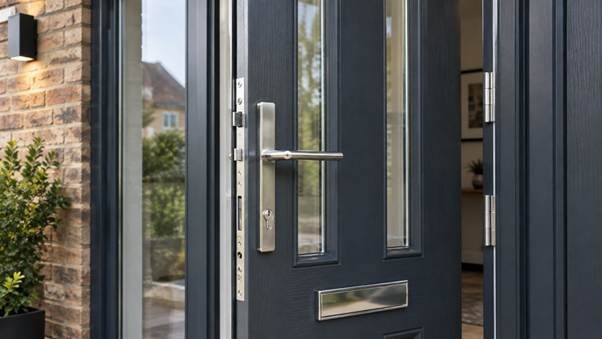
A new front door is one of the most important security decisions a homeowner can make. It is also easy to focus on the appearance of the door while overlooking the components that actually contribute to its security.
Modern composite doors can be designed with strong construction, multi-point locking, security cylinders, suitable glazing and quality hardware. However, security is not determined by the word “composite” alone. The exact door construction, frame, locks, cylinder, glazing, hinges and installation all matter.
If you are comparing new doors for your home, this guide explains the main things to check before placing an order.
1. Start with the door construction
A composite door is a complete doorset rather than simply a decorative panel. Its construction can vary depending on the manufacturer and product range.
When comparing doors, ask what the core and outer construction are and how the door has been designed to resist common forms of forced entry. The thickness and structure of the door, reinforcement around important hardware and the relationship between the door slab and frame can all be relevant.
It is also worth remembering that a strong door can be undermined by a poorly specified frame or inadequate installation. UK government guidance on security in dwellings specifically recognises the importance of doors being robust and fitted with appropriate hardware.
Rather than asking simply, “Is this a secure composite door?”, ask the supplier to explain exactly what security specification is included.
2. Check the locking system
The locking system deserves particular attention.
Many modern domestic doors use multi-point locking. Instead of relying on a single locking point, the mechanism can secure the door at several positions around the frame. Depending on the system, this can include hooks, deadbolts, rollers or other locking elements.
However, the number and type of locking points should not be used as the only measure of security. The complete locking system needs to be compatible with the door and frame and correctly installed.
Ask the supplier:
- What locking system is being fitted?
- How many locking points does it have?
- Is it operated by a key, thumbturn, handle or another mechanism?
- Does the system have a recognised security specification?
- What happens if the cylinder needs replacing in the future?
It is also important to use the locking mechanism correctly. Some multi-point systems require the handle to be lifted and the key turned to fully engage the locks. Police and local-authority security guidance advises homeowners to ensure doors are properly locked rather than simply closed.
3. Pay attention to the cylinder
The cylinder is the part of many doors where the key is inserted, and it deserves careful consideration.
A quality cylinder can provide protection against particular attack techniques, including lock snapping. Anti-snap cylinders are widely recommended for uPVC and composite doors, but the precise specification should be confirmed rather than assumed.
For example, some security guidance recommends cylinders meeting recognised standards such as TS007, depending on the door and locking system.
Ask your supplier:
“Which cylinder is included, and what security standard does it meet?”
If security is particularly important to you, ask whether the proposed cylinder has anti-snap, anti-drill and anti-pick protection, where applicable.
Do not assume that changing the cylinder alone makes the whole door a high-security doorset. The cylinder works as one part of the complete system.
4. Don’t overlook the hinges
Hinges are easy to forget because they are often less visible than the handle and cylinder.
The hinge side of the door needs to be securely connected to the frame, particularly where the door configuration means the hinges are externally accessible. Security features can include suitable hinge protection or hinge bolts, depending on the door design.
The installation also matters. A strong hinge attached inadequately to the frame or surrounding structure will not provide the same level of protection as a properly installed component.
Ask the installer what hinge arrangement is included and whether additional hinge protection is part of the specified security design.
For outward-opening doors, hinge security can deserve particular attention because of the position of the hinges. Security guidance recommends suitable hinge protection where appropriate.
5. Examine the glazing
Glass can make an entrance door attractive and allow natural light into a hallway, but the type and position of glazing should be considered from a security perspective.
A glazed panel close to the locking area deserves particular attention. If someone could break the glass and then reach the internal locking mechanism, the design may create a security weakness.
For this reason, ask what type of glass is being proposed. Depending on the design and location, options may include toughened or laminated safety/security glass.
Laminated glass can be particularly useful where enhanced resistance to impact is required because the interlayer helps hold the glass together after breakage. Police security guidance also recommends considering laminated glass where glazing could otherwise provide access to the lock.
Do not simply ask whether the door has “double glazing”. Ask exactly what glass specification is included.
6. Consider the hardware
Handles, letterplates, hinges, keeps and other hardware are part of the overall doorset.
A stylish handle may look impressive, but homeowners should also consider how the hardware contributes to the door’s security and durability.
If your door includes a letterbox, consider its position in relation to the locking mechanism. Security guidance advises keeping letterboxes away from locks where possible and considering suitable protection against someone reaching through the opening.
You can also ask about additional features such as door viewers, security restrictors or appropriate security hardware, depending on the property’s requirements.
Again, the aim is not to add every possible security product. It is to make sure the selected hardware is appropriate for the complete door specification.
7. What does PAS 24 mean?
PAS 24 is an important term you may encounter when researching door security in the UK.
PAS 24 is a security testing specification for doorsets and other products intended to provide enhanced security. A product that has been tested to the relevant PAS 24 requirements has undergone a defined security assessment.
However, it is important not to make the common mistake of assuming that every composite door is PAS 24 certified.
A composite door can be available in different specifications, configurations and hardware packages. PAS 24 status can depend on the particular tested doorset and configuration.
If a supplier tells you that a proposed door meets PAS 24, ask them to confirm exactly what has been tested and what specification is covered.
For new dwellings in England, Approved Document Q is also relevant to reasonable provision for resisting unauthorised access, including requirements concerning doors and windows.
The important point for homeowners is simple:
Do not rely on a general statement that a manufacturer’s doors are “secure”. Ask for confirmation of the exact product and specification being quoted.
8. Installation can be just as important
Even an excellent door can perform poorly if it is installed incorrectly.
The frame needs to be securely fixed, correctly aligned and suitable for the opening. The door must close properly, the locking points need to engage correctly and the hardware must operate as intended.
Government and police guidance consistently emphasises the importance of secure frames and correct fixing. A strong lock cannot compensate for a weak or poorly secured frame.
Before ordering, ask whether the quotation includes:
- Removal of the existing door
- Preparation of the opening
- New frame and fixing system
- Correct threshold installation
- Sealing around the frame
- Adjustment of the locking mechanism
- Final security and operation checks
- Making good around the opening
The quality of installation should form part of your decision when comparing suppliers.
9. Questions to ask your supplier
Before you agree to a quotation, consider asking these questions:
1. What is the exact composite door system being supplied?
2. What is the construction of the door?
3. Which locking system is included?
4. What cylinder is being used, and what security standard does it meet?
5. Is the cylinder anti-snap or otherwise designed to resist common attack methods?
6. What type of glazing is included?
7. Is laminated or security glazing available where appropriate?
8. How are the hinges and hinge side of the doorset secured?
9. Does the exact doorset configuration meet PAS 24 where required?
10. What installation and fixing method will be used?
11. What guarantee is provided for the door, hardware and installation?
12. Can you provide the final written specification before I place the order?
That last question is particularly useful. It gives you an opportunity to check that the features discussed during the quotation process are actually included in the final order.
10. Don’t compare security by price alone
When comparing two composite doors, the cheapest quotation may not contain the same specification as the more expensive option.
One quotation might include a standard cylinder and glazing package, while another could include upgraded security hardware, a different locking system, specialist glazing and additional features.
For this reason, compare the complete specification, not just the headline price.
A good quotation should make it reasonably clear what door system, frame, glazing, locks, cylinder, hardware, colour, installation and guarantees are included.
Final thoughts
Checking the security of a composite door does not have to be complicated. Start with the complete doorset and work through the important components: construction, frame, locks, cylinder, hinges, glazing, hardware and installation.
PAS 24 can be an important consideration where enhanced security is required, but homeowners should not assume that every composite door automatically has PAS 24 status. Always ask the supplier to confirm whether the exact door configuration being quoted has the relevant certification or testing.
Most importantly, get the final specification in writing before ordering. That way, you know exactly what you are paying for and can make a meaningful comparison between different suppliers.
If you are considering new composite doors, look at the complete product and installation specification rather than choosing on appearance or price alone.
For further information about door options and services, visit Trafford Windows’ services page.