
Aluminium Domestic Doors vs uPVC Doors: Which Is Right for Your Home?
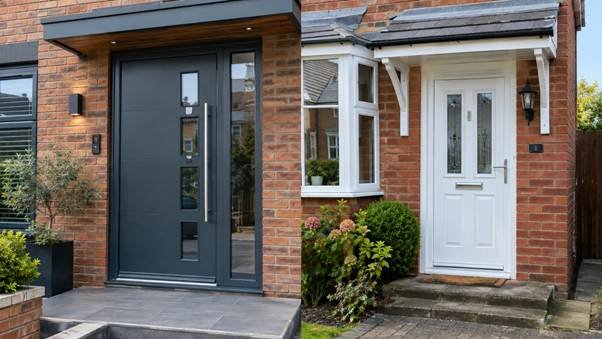
Choosing a new external door is about more than deciding which colour looks best. The material, frame design, glazing, security specification and overall style can all affect how the finished door looks and performs. Two of the most common choices for UK homeowners are aluminium domestic doors and uPVC doors.
Neither material is automatically the better option. The right choice depends on the property, the size and type of opening, your preferred appearance, the level of glazing required and your budget.
Modern aluminium and uPVC systems have both developed considerably, so it is worth comparing the complete doorset rather than judging the material alone. In particular, security, thermal performance and glazing depend on the specific system and specification selected. (Home Build Doors)
Appearance
Appearance is often one of the first differences homeowners notice.
Aluminium doors are particularly associated with clean, contemporary styling. The strength of aluminium allows manufacturers to produce relatively slim profiles, which can leave more of the opening occupied by glass. This can create a crisp, architectural appearance that works particularly well with modern homes and larger glazed openings. (TPL Trade Limited)
uPVC doors generally have more substantial frame profiles. This does not necessarily make them unattractive; in fact, their proportions can work very well on traditional, suburban and period-inspired properties. Panel designs, decorative glazing and wood-effect finishes can give a uPVC door a familiar domestic appearance.
The important point is that neither look is universally right. A slim aluminium entrance door may look excellent on a contemporary extension but feel visually out of place on a traditional cottage. Conversely, a classic uPVC door may complement an older property better than an ultra-modern aluminium design.
Frame design
Frame design is one area where aluminium can offer a noticeable difference.
Aluminium has a high strength-to-weight ratio, allowing manufacturers to create strong profiles without necessarily requiring the same visual bulk as some uPVC designs. This is particularly useful when designing doors with large areas of glass, wide openings or multiple panels.
Modern aluminium doors should also be considered in terms of thermal-break technology. A thermally broken aluminium frame separates the inner and outer sections to reduce heat transfer, helping modern systems achieve useful thermal performance. (Trade Windows Online)
uPVC frames are made from rigid PVC profiles, commonly incorporating internal reinforcement. Their construction naturally provides good insulation, while the additional profile depth can contribute to a different visual character.
When comparing quotations, therefore, do not simply ask whether the frame is aluminium or uPVC. Ask about the actual system, profile, reinforcement, thermal performance and doorset specification.
Glazing
The choice of glazing can have just as much impact as the frame.
Both aluminium and uPVC doors can accommodate different glazing configurations, including clear, obscure, decorative, toughened and laminated glass, depending on the particular system and application.
For patio doors, rear doors and doors leading into an extension, larger areas of glass can help introduce natural light and create a stronger connection between the house and garden. Aluminium can be particularly useful where slim sightlines and large glazed areas are priorities.
Security should also be considered when selecting the glass. Toughened glass provides increased resistance to impact, while laminated glass can provide additional security characteristics. The correct choice depends on the location and specification of the door.
The important lesson is not to compare the frame in isolation. A door is a complete system consisting of the frame, glass, locks, hinges, seals, threshold and installation.
Colour and finish
Colour is another area where aluminium offers considerable design flexibility.
Powder-coated aluminium doors can be specified in a wide range of colours, including many RAL shades. This makes it possible to coordinate the door with windows, cladding, brickwork or other architectural features. Some systems can also provide different colours internally and externally. (Grantham Doors & Awnings)
uPVC doors are also available in numerous colours and finishes. Popular options include white, anthracite grey, black, cream and wood-effect finishes. Foiled finishes can be particularly useful when homeowners want the appearance of a traditional painted or timber-style door without the same level of ongoing painting.
The best choice depends on the property. A bold aluminium colour might become a feature of a contemporary entrance, while a wood-effect uPVC door may blend naturally with a more traditional home.
Maintenance
Both materials are relatively low maintenance compared with traditional painted timber.
Aluminium does not require regular painting in the same way as timber, and a good-quality powder-coated finish is designed for external use. Routine cleaning and checking the hardware, seals and moving parts should form part of normal household maintenance.
uPVC is similarly straightforward to maintain. The frames can generally be cleaned with suitable household products, while hinges, locks and other moving components should be checked and maintained according to the manufacturer’s recommendations.
Maintenance requirements can also depend on the environment. Doors exposed to heavy weather, dirt or coastal conditions may require more frequent cleaning regardless of the material.
In practice, installation quality and the quality of the hardware can be just as important as the frame material when considering how a door performs over time.
Security specification
Security should never be judged simply by saying that aluminium is stronger than uPVC, or vice versa.
A properly specified aluminium doorset can provide excellent security, while a well-designed and reinforced uPVC door can also provide a high level of protection. Modern security performance depends on the complete system, including the locking mechanism, cylinder, hinges, keeps, frame construction, glazing and installation. (Home Build Doors)
When obtaining quotations, ask whether the proposed doorset has been independently tested and whether it can meet relevant security requirements such as PAS 24, where appropriate.
Features such as multi-point locking, appropriate cylinders and security glazing may all form part of the specification.
For homeowners, the key question should therefore be: What security specification is included in the quoted doorset?
That gives you a much more useful comparison than simply asking whether the door is aluminium or uPVC.
Property style
Your home’s architecture should play a major role in the decision.
Aluminium is often a natural fit for contemporary properties, modern renovations and minimalist designs. Its slim sightlines can complement clean architectural lines and large glazed areas.
It can also work particularly well where homeowners are trying to update an older property without making the new door look overly traditional.
uPVC, meanwhile, can be an excellent choice for conventional UK homes where the replacement door needs to blend with existing uPVC windows and other external features.
For period properties, the available door design, colour and glazing pattern may matter more than the material itself.
The objective should be to create a door that looks as though it belongs to the property.
Extensions and larger openings
Extensions are one situation where the differences between the materials can become more noticeable.
Modern extensions often place greater emphasis on natural light and larger openings. Aluminium’s structural characteristics can make it well suited to larger glazed doors, including sliding, bi-fold and other contemporary configurations. (Trade Windows Online)
For example, an extension opening onto a garden might benefit from a design with slim frames and extensive glazing. Aluminium can provide the modern appearance many homeowners want for this type of project.
That does not mean uPVC should be excluded. Depending on the dimensions, design and budget, a uPVC solution may still be entirely appropriate.
The opening should be measured and assessed before deciding which material is most suitable.
Quotation considerations
Price is naturally important, but comparing only the headline figure can produce a misleading result.
Aluminium doors will often have a higher initial price than basic uPVC alternatives because of the material, manufacturing process, system design and specification. However, the cheapest quotation is not necessarily the best value.
When comparing quotations, ask each installer to specify:
- The exact door material and system
- Overall door dimensions
- Frame and profile specification
- Glazing type and thickness
- Thermal performance
- Locking system
- Security certification or testing
- Colour and finish
- Threshold specification
- Handles and other hardware
- Removal of the existing door
- Making good around the opening
- Installation
- Guarantee and after-sales support
This makes it much easier to compare like with like.
A quotation for a basic uPVC door should not be directly compared with a highly specified aluminium doorset containing premium hardware, specialist glazing and a different opening configuration.
Aluminium or uPVC: Which Should You Choose?
There is no universal winner.
Aluminium may appeal to you if you prioritise:
- Slim contemporary sightlines
- Larger glazed areas
- Modern architectural styling
- A broad choice of powder-coated colours
- Larger or more demanding openings
- A premium appearance
uPVC may appeal if you prioritise:
- A familiar domestic appearance
- Straightforward maintenance
- Good insulation characteristics
- Matching existing uPVC windows
- A practical solution for a standard opening
- Keeping the initial cost under control
Ultimately, the best door is the one that suits your property, opening, design preferences, security requirements and budget.
If you are considering a new entrance, patio or other domestic door, it is worth looking at the complete range of options rather than choosing solely on material. Trafford Windows provides windows and door solutions for homeowners, with options to suit different property styles and requirements.
For more information, see the Trafford Windows services page: aluminium doors
A properly specified and professionally installed door can provide the appearance, security and everyday performance you expect. Whether that ultimately means aluminium or uPVC should be decided by the individual project—not by the material name alone. (Home Build Doors)